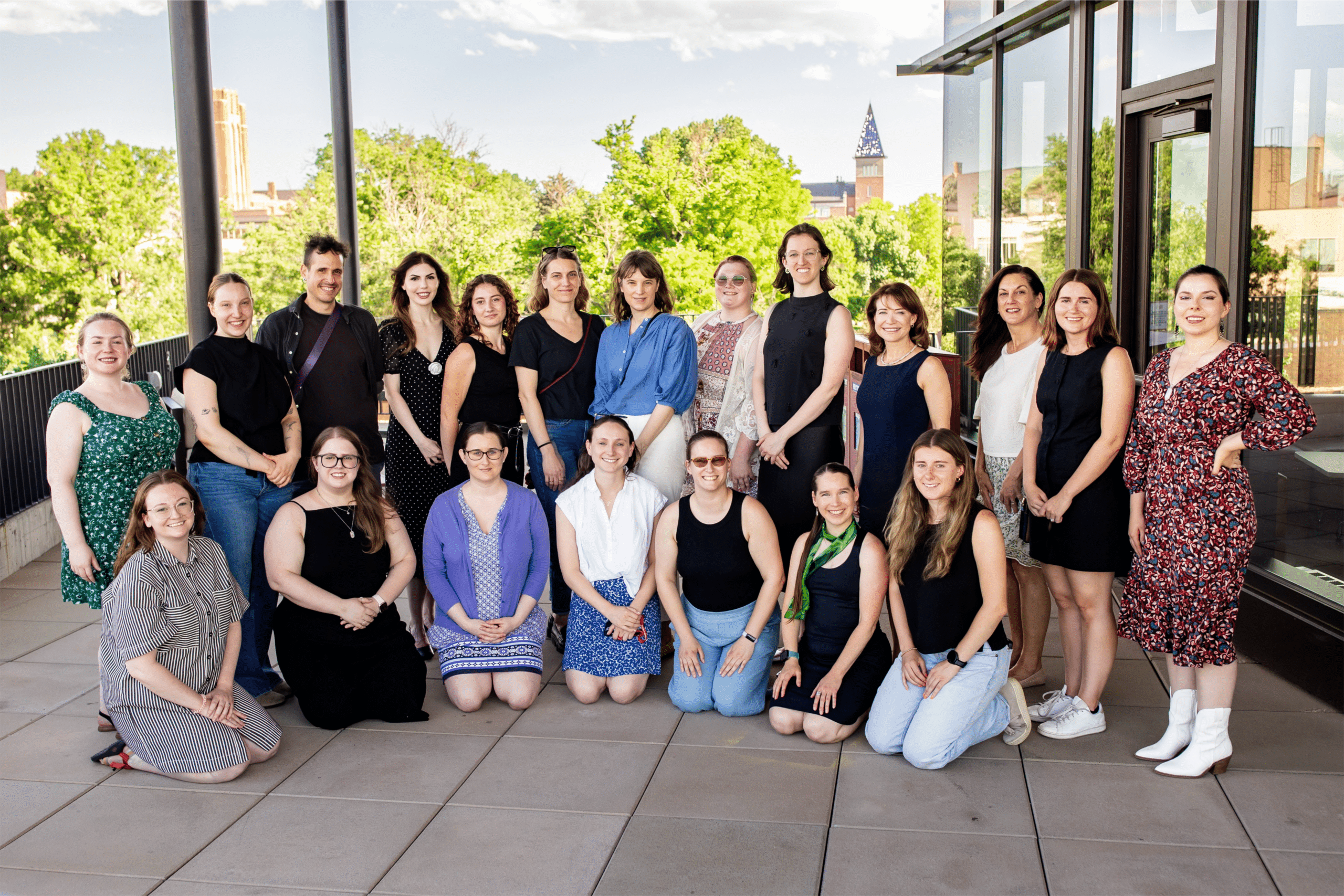
Art, Ethics, and the Power of Provenance
How DU’s Center for Art Collection Ethics (ACE) is shaping a more transparent, responsible art world.
Whether prompted by high-profile museum heists or quiet restitution negotiations, questions of art ownership and ethics continue to captivate the public imagination. At the University of Denver, ACE treats these issues as scholarship, promoting ethical stewardship and preparing professionals to make informed decisions at every stage of the art acquisition and collection process.
About ACE
Established by DU’s College of Arts, Humanities & Social Sciences (CAHSS) in 2018, ACE is the only U.S. program of its kind that trains museum and art market professionals in ethical research and stewardship of art collections outside of a degree program, while also educating the public about provenance research and responsible collecting practices.
The program is led by Founding Director and History Professor Elizabeth Campbell, whose internationally recognized research into Nazi-looted art and restitution revealed a significant gap in provenance research training and public education.
“I was meeting claimants—descendants of victims trying to recover works of art for their families—and seeing how many obstacles they faced,” says Campbell. “Even when museums intend to be ethical stewards, there are few practical training opportunities in provenance research. It became clear there was a real need for education, both for professionals and the public, to raise awareness of these issues.”
The Role of Donor Support
Generous gifts from individual donors and organizations like the Art Ashes Foundation allow ACE to deliver and expand its programming. This essential support brings new voices to the conversation, enables access to international experts, lowers costs for participants, and ensures the program can continue to grow.
Through these partnerships, ACE can provide the practical training future leaders need to address ethical research and challenges in the art world.
“Our mission at Art Ashes is to advance the restitution of Nazi-looted art, shed light on the theft of Jewish property, and promote the highest standards of ethical research. Elizabeth Campbell’s creation of ACE stands out as one of the few programs in the United States offering rigorous, practical training for art professionals,” says Joel Greenberg, founder and president of Art Ashes. “ACE is cultivating a new generation of professionals devoted to ethical stewardship across museums, galleries, and the art market—individuals determined to confront historical injustices and foster a more transparent cultural landscape.”
CAHSS Dean Sahara Byrne agrees. “What the Art Collection Ethics program under Elizabeth Campbell’s leadership contributes — not just to knowledge but to restorative justice — is vitally important internationally. This contribution elevates the stature of both the College of Arts, Humanities, and Social Sciences and the University of Denver. We’re enormously proud of the program and deeply grateful to our generous donors who ensure its continuity. They are the Denver Difference,” she says.
ACE Programs
ACE offers postgraduate, non-degree certificate programs designed for graduate students and emerging professionals in museums, galleries, and the art market. Courses are offered both in person and online, and members of the public can participate through non-certificate enrollment or attend free lectures, panel discussions, and symposia.
Participants learn from international experts, gaining experience through real-world case studies, hands-on training, and applied research. ACE’s hybrid format cultivates a strong network, enabling professionals to exchange information, share tips, and better utilize resources.
Since its inception, ACE has offered four programs, providing information and insight to more than 450 students worldwide. In addition, ACE has hosted nine events to educate the public on the importance of provenance research.
Research Excellence
As part of DU’s R1 research designation, ACE demonstrates how humanities research drives innovation. Digitization has transformed provenance work, and ACE teaches students to navigate online archives and databases — many of which are now publicly accessible and connected across institutions like the Getty Research Institute.
Hands-on workshops show students how to pull dealer records, auction data, and archival materials in seconds. ACE is also exploring artificial intelligence (AI) tools to analyze large datasets and uncover patterns. These research efforts will help strengthen museum practices, restitution efforts, and public understanding of cultural heritage.
Real-World Impact
ACE alumni are using their provenance research skills to make a difference worldwide. During the summer of 2025, an ACE graduate in Argentina provided expert commentary when an 18th century Italian painting looted by the Nazis appeared in a real estate listing in Mar del Plata. Argentine authorities seized the painting after the story went viral, and an American descendant of the Nazi victim has filed a claim.
Beyond headline-making examples, ACE-trained professionals uphold ethical standards every day. Working for internationally renowned organizations — including the Metropolitan Museum of Art and the Museum of Modern Art in New York, Christie’s, Sotheby’s, the Art Institute of Chicago, Centre Pompidou Metz, the U.S. Holocaust Memorial Museum, and the Getty Research Institute — they advocate for ethical provenance procedures. These professionals help ensure collections are managed with accuracy, thoughtfulness, and integrity. At some large institutions where change often occurs slowly, ACE alumni are well-positioned to help implement more ethical practices.
For example, one ACE program participant, now head of sale for the 19th-Century European Paintings Department at Sotheby’s, noted that the resources, tools and knowledge gained from the program strengthened the research integrity of her cataloguing process. This allowed her to conduct streamlined, thorough provenance research on roughly 200–300 objects in the fall of 2025 alone.
Another participant involved with the Judaica Collector-Connoisseur sale of the Max N. Berry Collections at Christie’s used her ACE training to conduct provenance research to bring the history of a collection of selected Hanukkah lamps to light.
This ongoing diligence — and getting it right from the start — is what ensures ethical collecting practices and builds trust across museums, galleries, and the art market.
“In an increasingly digitized world, tangible objects connect us to our families, our communities, and our histories in ways that digital items cannot,” says Campbell. “Ethical stewardship is about honoring those deep connections. Museums and institutions have a responsibility to ensure these objects were acquired legally and ethically, and to work with individuals or communities when issues arise—through restitution, compensation, or other just solutions agreed upon by all parties.”
Learn more about ACE’s unique training, outreach, and advocacy work.
To learn more about DU’s Center for Art Collection Ethics, contact Executive Director of Development & Alumni Engagement Jennifer Garner at Jennifer.Garner@du.edu or 303-871-7467.
